The Importance of Professional Embroidery Digitizing for Custom Apparel
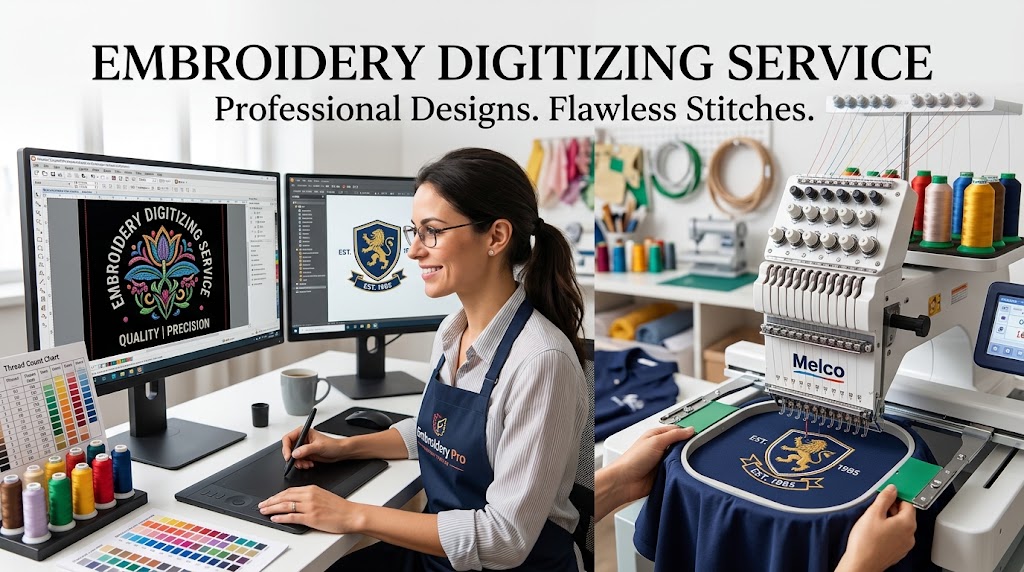
Custom embroidery is one of the most effective ways to give clothing, uniforms, hats, bags, and promotional products a professional appearance. However, getting a high-quality embroidered result starts long before the needle begins stitching. The artwork must first be prepared correctly through embroidery digitizing.
Digitizing converts artwork into a stitch-based format that an embroidery machine can understand. The process involves much more than changing an image into a different file format. It requires decisions about stitch types, density, direction, sequencing, underlay, and other technical details.
For businesses and apparel manufacturers, professional custom embroidery digitizing can help transform ordinary artwork into embroidery-ready designs suitable for different fabrics and products.
What Makes Embroidery Digitizing So Important?
An embroidery machine cannot directly interpret a standard JPG, PNG, or other image file in the same way a person can. It needs a specialized embroidery file containing instructions for every part of the design.
A digitizer analyzes the artwork and creates those instructions.
The digitizing process determines:
Where stitches should begin and end
Which stitch types should be used
How dense each section should be
The direction of stitches
The order of different design elements
How colors should be arranged
How the design should work with the selected fabric
Without proper planning, even attractive artwork can produce disappointing embroidery.
Turning Digital Artwork Into Stitch Instructions
The first stage of professional digitizing is understanding the original artwork. A digitizer examines the design and identifies its major elements, including outlines, text, shapes, colors, and fine details.
These elements are then recreated using embroidery-specific structures.
For example, a narrow border may be created with satin stitches, while a larger background area may use a fill stitch. Small details may require running stitches or adjustments to remain visible after stitching.
This process requires both technical knowledge and an understanding of how thread behaves on fabric.
The Role of Stitch Density
Stitch density is an important part of embroidery digitizing. It refers to how closely stitches are placed within a particular area.
If density is too high, the design can become unnecessarily heavy. It may also increase stitch count and create tension-related issues. If density is too low, the fabric may show through the design or the embroidery may lack proper coverage.
Professional digitizing aims to create an appropriate balance based on the design, fabric, size, and stitch type.
Why Stitch Direction Matters
Stitch direction can have a major effect on the appearance of embroidered artwork.
Changing stitch direction between different elements can create texture and visual contrast. It can also help certain shapes appear more natural when reproduced with thread.
For example, lettering, curved shapes, leaves, borders, and other design elements may require different stitch directions.
This is one reason professional digitizing cannot simply rely on automatic image conversion.
Choosing the Right File for the Project
Different embroidery machines and production environments may require different file formats. A professional digitizing service can prepare the design according to the requirements of the embroidery machine.
Before ordering, it is useful to know:
The embroidery machine being used
The required file format
The final embroidery size
The type of product
The fabric being used
The number of colors required
Providing this information can help the digitizer prepare a more suitable file.
Custom Embroidery Digitizing for Different Products
Every embroidered product presents different challenges. Custom embroidery digitizing allows artwork to be prepared according to its intended application rather than using one generic setup.
Embroidered Shirts
Polo shirts, work shirts, uniforms, and T-shirts often feature company logos or small branding elements. These designs may need careful adjustments because smaller embroidery areas provide limited space for details.
Hats and Caps
Caps have curved surfaces that can make embroidery more challenging. Designs may require specialized planning to maintain alignment and readability.
For businesses producing embroidered hats, professional cap digitizing services can help prepare artwork specifically for this application.
Jackets
Jackets can accommodate larger embroidery designs, including company logos, sports graphics, and decorative artwork. Large designs require careful planning to control stitch density and overall weight.
Embroidered Patches
Patches need strong borders and suitable stitch structures so the artwork remains clear and maintains its shape after production.
Digitizing Logos for Business Branding
Businesses frequently use embroidery to display their logos on uniforms, promotional clothing, caps, bags, and workwear.
A logo that looks perfect on a website may need adjustments before it can be embroidered. Very small text, thin lines, and complex details may need to be simplified or redesigned for stitching.
Professional logo digitizing converts business artwork into an embroidery-ready design while considering the practical limitations of thread and fabric.
This can be especially useful for companies that need the same logo embroidered across different products.
How Fabric Affects Digitizing
The same embroidery file may not perform identically on every fabric.
Cotton, denim, fleece, polyester, jackets, caps, and other materials can behave differently during stitching. Fabric thickness, stretch, texture, and stability can all influence how a design should be digitized.
For this reason, professional digitizing should consider the final application.
A design intended for a stable denim jacket may need different treatment from one intended for a stretchy polo shirt.
Common Mistakes in DIY Digitizing
Automatic digitizing software has made embroidery preparation more accessible, but automated results are not always suitable for professional production.
Common problems include:
Excessive stitch density
Incorrect stitch direction
Poor sequencing
Unnecessary stitches
Tiny details that cannot stitch clearly
Incorrect underlay
Poor lettering
Excessive jumps and trims
These issues can affect both the appearance and production efficiency of the final embroidery.
Manual review and adjustments can help address problems that automatic conversion may overlook.
Why Artwork Preparation Matters
The quality of the original artwork can influence the digitizing process.
A clean vector or high-resolution image generally gives the digitizer more information to work with. However, even a high-quality image still needs to be interpreted specifically for embroidery.
If artwork needs to be converted into a scalable format before embroidery preparation, vector art services can help create artwork that is easier to work with for different applications.
Professional Digitizing Can Save Production Time
An embroidery file that requires repeated adjustments can slow down production. Poor stitch structures may lead to thread breaks, excessive trims, design distortion, or other production issues.
A properly prepared file can make the stitching process more predictable.
For embroidery businesses handling multiple customer orders, having professionally digitized files can also improve consistency between production runs.
What Should You Look for in a Digitizing Service?
When choosing a digitizing provider, consider several factors rather than focusing only on price.
Portfolio
Look at previous embroidery examples. A portfolio can demonstrate whether the provider has experience with logos, lettering, detailed artwork, hats, patches, and other applications.
Experience
Different designs require different digitizing approaches. Experience with multiple embroidery applications can be valuable when handling unusual or detailed artwork.
File Formats
Confirm that the provider can supply the embroidery format required by your machine.
Revisions
Ask whether revisions are available if the initial result needs adjustments.
Communication
Clear communication about size, fabric, placement, colors, and production requirements can help prevent misunderstandings.
When Should You Use Custom Digitizing?
Custom digitizing is particularly useful when you need an embroidery file created specifically for a particular product or production requirement.
It can be suitable for:
Company logos
Clothing brands
Sports teams
School uniforms
Promotional products
Personalized gifts
Embroidered patches
Hats and caps
Jackets
Workwear
Instead of treating every design the same way, custom digitizing allows the artwork to be prepared according to its intended use.
Final Thoughts
Professional embroidery digitizing plays an important role in turning digital artwork into high-quality stitched designs. The process involves careful decisions about stitch types, density, direction, sequencing, underlay, sizing, and fabric compatibility.
For businesses and individuals who need custom embroidery digitizing, working with an experienced service can help prepare artwork for different products and embroidery applications.
Whether you're creating a company logo for uniforms, artwork for embroidered caps, a patch design, or custom apparel, properly digitized artwork provides the foundation for a successful embroidery project.
Explore Rise Digitizing for professional embroidery digitizing solutions designed for a wide range of custom embroidery projects.

About Premium Author
This post has been authored and published by one of our premium contributors, who are experts in their fields. They bring high-quality, well-researched content that adds significant value to our platform.
Popular Categories
Stay Connected
Recent Posts