How to Calculate the Right Generator Size for Your Needs
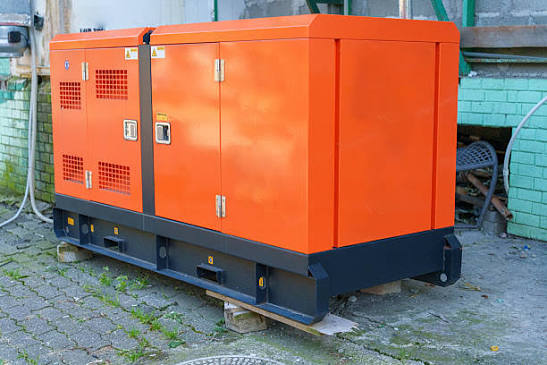
Choosing the right generator size is one of the most important decisions in any temporary or backup power project. Get it right, and your equipment runs smoothly, fuel costs stay under control and the generator lasts longer. Get it wrong, and the consequences can be expensive.
An undersized generator will struggle to carry the load. It may trip, overheat or fail to start large equipment, and voltage fluctuations can damage sensitive electronics. An oversized generator creates different problems. It costs more to hire or buy, consumes more fuel than necessary and, when a diesel engine runs at very light loads for long periods, it can suffer from a condition known as wet stacking, where unburned fuel builds up in the exhaust system.
The goal is a generator that comfortably handles your real load, including peaks, with a sensible margin for safety. This guide explains the key terms, walks through the calculation step by step and highlights the factors that most often catch people out.
Key Terms You Need to Know
Before calculating anything, it helps to understand four terms that appear on every generator specification.
Kilowatts (kW). This is real power, the energy your equipment actually uses to do work. Most equipment labels show power in watts or kilowatts.
Kilovolt-amperes (kVA). This is apparent power, the total power the generator must supply. Generators are usually rated in kVA.
Power factor (PF). This is the ratio between kW and kVA. It reflects how efficiently the load uses the power supplied. Most generator sizing assumes a power factor of 0.8, which means kW = kVA × 0.8, or kVA = kW ÷ 0.8.
Prime and standby ratings. A prime rating is the power a generator can deliver continuously as a main source of supply. A standby rating is a slightly higher figure intended only for emergency backup, typically for a limited number of hours per year. If the generator will be your main power source, size it using the prime rating.
Step 1: List Every Load
Start by listing every piece of equipment the generator will power. Be thorough. Include lighting, computers, heating or cooling, pumps, motors, kitchen equipment, tools and anything else that will be connected.
For each item, record its power rating in kW. You will find this on the equipment nameplate or in the manual. If the rating is given in amps rather than watts, you can convert it. For single-phase equipment, multiply amps by voltage and divide by 1,000 to get an approximate kW figure. For three-phase equipment, the calculation also includes the square root of three (about 1.732) and the power factor, so it is worth using a conversion calculator or asking an electrician.
Step 2: Separate Resistive and Motor Loads
Not all loads behave the same way when they start.
Resistive loads, such as lights, heaters, kettles and ovens, draw roughly the same power when they start as when they run.
Inductive or motor loads, such as air conditioners, compressors, pumps, refrigeration units, lifts and power tools, draw a much higher current at start-up. This starting surge can be three to five times the running power, and occasionally more for large motors started directly on line.
Identify which of your loads contain motors, and note which is the largest. The largest motor usually determines how much extra capacity the generator needs.
Step 3: Calculate the Running Load
Add together the running power of everything that could operate at the same time. This is your total running load in kW.
Be realistic about what actually runs together. In an office, not every device operates at full power simultaneously. On a construction site or at an event, however, peak periods can see almost everything switched on at once. When in doubt, plan for the higher figure.
Step 4: Allow for Starting Surges
To account for motor starting, add the additional surge of the largest motor to your running load. A simple method is to take the largest motor's running power, multiply it by its starting factor (typically three) and subtract its running power. The result is the extra capacity needed at the moment it starts.
If several large motors could start at exactly the same time, their surges add together. This is why staggering start-up, using soft starters or variable speed drives can significantly reduce the generator size required.
Step 5: Add a Safety Margin
Never size a generator to run at 100 percent of its capacity. Add a margin of 20 to 30 percent to your peak figure. This margin covers equipment that draws more than its label suggests, small additions to the load and future growth. It also keeps the generator operating in its most efficient range, generally between 50 and 80 percent of rated capacity.
Step 6: Convert to kVA and Choose a Standard Size
Finally, convert your figure from kW to kVA by dividing by 0.8. Generators are manufactured in standard sizes, so select the next available size above your result.
A Worked Example
Imagine a small outdoor event with the following equipment:
| Equipment | Running load (kW) | Load type |
|---|---|---|
| Stage and site lighting | 8 | Resistive |
| Sound system | 10 | Electronic |
| Catering equipment | 20 | Mostly resistive |
| Three air conditioning units at 5 kW each | 15 | Motor |
| Office, charging and miscellaneous | 5 | Mixed |
| Total running load | 58 |
The largest single motor is one 5 kW air conditioning unit. With a starting factor of three, it needs 15 kW at start-up, which is 10 kW more than its running load. Assuming the three units are started one at a time, the peak load becomes 58 + 10 = 68 kW.
Adding a 25 percent safety margin gives 68 × 1.25 = 85 kW. Converting to kVA gives 85 ÷ 0.8 = 106 kVA.
Since 106 kVA falls between common sizes, the correct choice would be the next standard size up, such as a 125 kVA generator. Choosing a 100 kVA unit would leave the system without its intended safety margin.
Factors That Affect Your Result
The calculation above gives a sound starting point, but real-world conditions can change the answer.
Temperature. Generators lose output in high ambient temperatures. Many manufacturers derate their units by a few percent for every five degrees above a reference temperature, often 40°C. In very hot climates, this can justify moving up a size.
Altitude. Thinner air at high altitude reduces engine performance. Derating is commonly applied above 1,000 metres, although exact figures vary by manufacturer.
Non-linear loads. LED drivers, computers, UPS systems and variable speed drives create harmonic distortion. Large amounts of these loads may require a larger alternator to maintain stable voltage.
Single or three phase. Make sure the generator provides the correct supply for your equipment. Three-phase loads should be balanced across the phases, since an unbalanced load can overload one phase long before the generator reaches its total rating.
Duration and fuel. For long-running applications, consider fuel tank capacity and consumption. A slightly larger generator with an external fuel tank may be more practical than frequent refuelling.
Common Sizing Mistakes to Avoid
- Ignoring starting current. This is the most frequent cause of generators tripping when air conditioning or pumps switch on.
- Relying on guesswork. Estimating loads from memory rather than nameplates leads to inaccurate results.
- Oversizing "just to be safe". A generator that runs lightly loaded for long periods wastes fuel and can suffer long-term engine problems.
- Forgetting future needs. If the load is likely to grow during a project, plan for it now.
- Confusing kW and kVA. Comparing a kW load directly with a kVA rating without converting can leave you 20 percent short.
Final Thoughts
Calculating the right generator size follows a clear sequence: list every load, identify motors and their starting surges, calculate the peak demand, add a safety margin, convert to kVA and select the next standard size. Then adjust for temperature, altitude, load type and runtime.
For simple applications, this method will give you a reliable answer. For complex sites, critical facilities or large events, it is wise to have the calculation checked by a qualified professional. An experienced generator rental service can review your load list, carry out a site survey and recommend the most efficient setup, which may include multiple synchronised units, distribution equipment or an external fuel supply.
Taking the time to size your generator correctly protects your equipment, controls your costs and ensures that power is one less thing to worry about.

About Premium Author
This post has been authored and published by one of our premium contributors, who are experts in their fields. They bring high-quality, well-researched content that adds significant value to our platform.
Popular Categories
Stay Connected
Recent Posts